Setup
Connect Cursor to an encrypted knowledge base over MCP
Run from your home folder, approve this computer in your browser and restart Cursor: its agent can then search, read and write the notes you picked, over MCP. Every change it makes is signed as Cursor's and can be undone in one click, and your notes stay end-to-end encrypted.
By Fadel Kaadan · Updated
What Cursor can do once it's connected
Knowtarium is an end-to-end encrypted knowledge base that people and their own AI agents work in. Cursor connects to it over MCP, through a small server that runs on your computer and decrypts notes there. Once it's connected, Cursor's agent can:
- Search and read your notes, follow the links between them and find related notes, in the workspace and folders you gave it. Decisions, specs and meeting notes are there while it works on your code.
- Create and edit notes. Each change is saved at once, signed with Cursor's own key and kept in the history, so you can see what it did and undo it in one click.
- Follow your folder instructions. What you write for a workspace or folder in the app (its
AGENTS.md) reaches Cursor wherever it reads and writes there. It can only propose changes to those instructions, never make them. - Wait for you where you want it to. Turn on review ("Ask me first") for a workspace or folder, and Cursor's note changes there wait as diffs for you to approve or reject. Folder changes there are refused instead, and Cursor tells you what it would change.
- Move or delete notes and change folders, only if you gave it those permissions, and it's told to do this only when you ask in your conversation.
It can't reach a workspace or folder you didn't give it, sign as you, mark a note as checked by you, or skip review where you turned it on. The full list is on the agents page.
What Cursor sees
Our servers only ever hold your notes as ciphertext. The knowtarium CLI decrypts them on your computer and hands Cursor only what its tools return. Whatever Cursor reads goes to Cursor and the model it uses, like the code you work on, so connect it only to the notes you'd share with it. How the encryption works is on the security page.
Set it up with npx knowtarium connect
You need Node.js 20 or later (22 or 24 recommended) and a free Knowtarium account. Open a terminal and run the command from your home folder. npx trusts the folder it runs in, so running it inside a project would let that project's files stand in for Knowtarium's.
Opening the browser to connect this computer to Knowtarium.Connected to workspace ws_8f2k (read and write).Add Knowtarium to which agents? Cursoradded to Cursor (/Users/you/.cursor/mcp.json)previous file saved as /Users/you/.cursor/mcp.json.knowtarium-backup-<time>
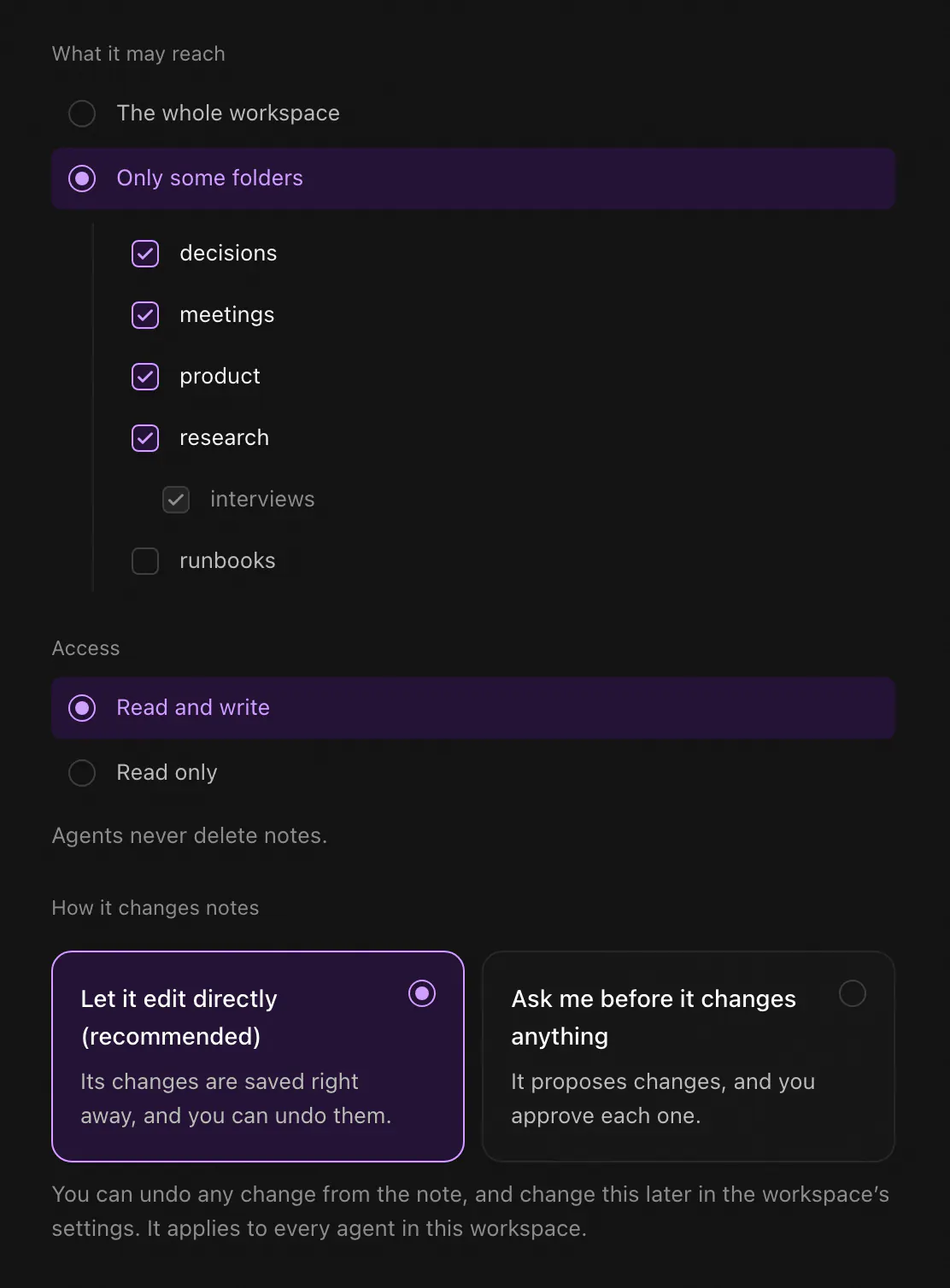
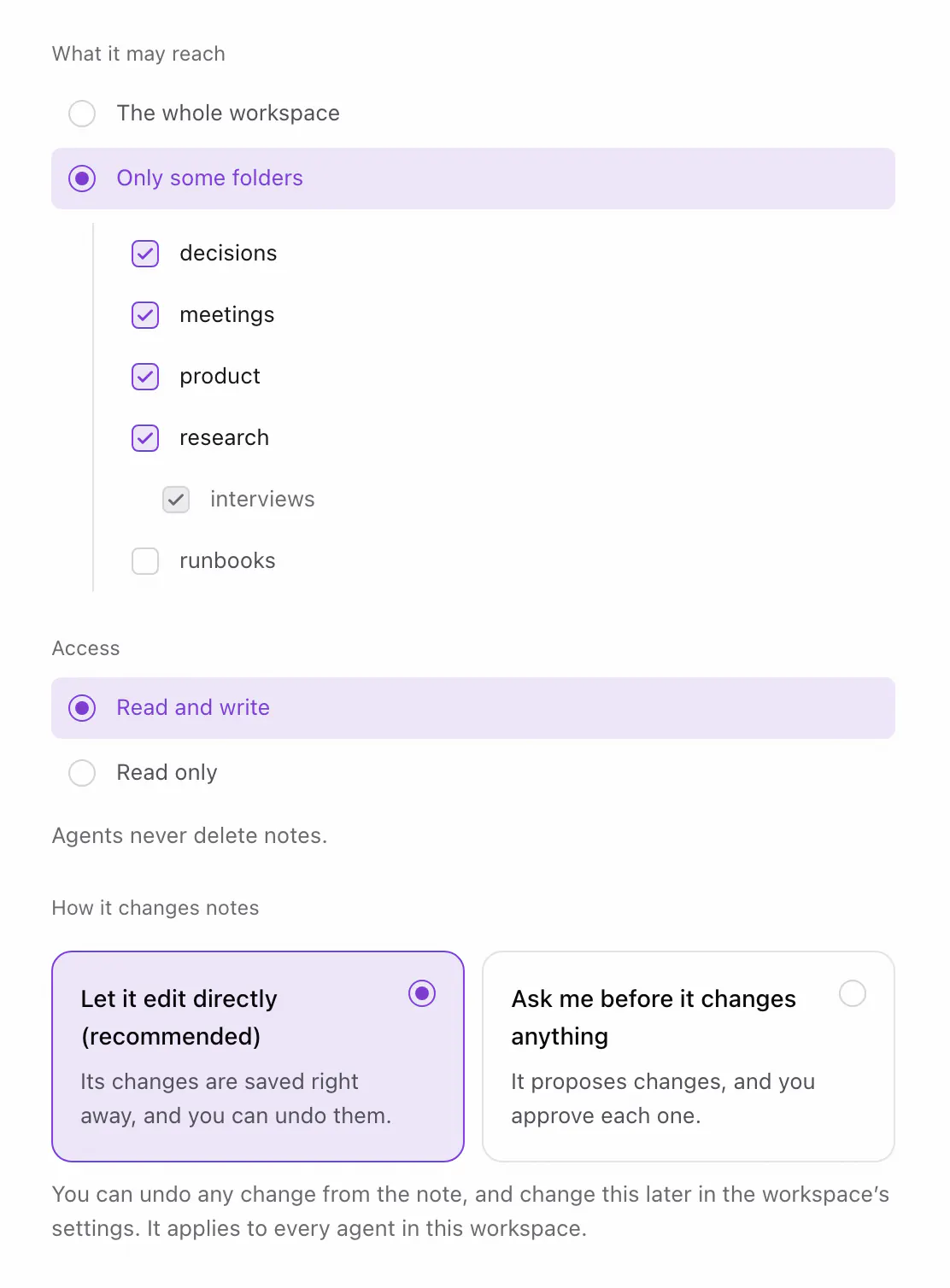
- Approve this computer. Your browser opens Knowtarium. Name the agent, pick what it can reach (see below) and click Allow, but only if you ran the command yourself. Over SSH, where the browser can't reach the terminal, you confirm a matching code in both places instead.
- Pick the agents. The CLI lists the agents it finds on your computer, all ticked. Press Enter to add Knowtarium to all of them, or untick some first (arrows move, space toggles,
atoggles all, Esc adds none). - Cursor gets its entry. The CLI adds Knowtarium to Cursor's user settings in
~/.cursor/mcp.json, so it's there in every project. It leaves your other servers and settings as they are and backs up the previous file next to it. The entry starts the server from your home folder, never from the project Cursor has open. - Restart Cursor. Quit it and open it again, so it picks up the new server.
No password, token or key goes in Cursor's settings. The connection is stored encrypted, with its key in your system keychain (or a file only you can read where there is none). To see what the CLI would change before it writes anything, run . The CLI is open source: the code is on GitHub.
 (opens full size in a new tab)
 (opens full size in a new tab)
Or use the Add to Cursor link in the app
If you're already signed in to Knowtarium, the app can add the server to Cursor for you. It still needs Node.js 20 or later, since Cursor starts the same server from npm.
- Open Connect an agent. In the web app, go to Settings, Agents, Connect an agent (app.knowtarium.com/settings/agents/new), on the computer where Cursor runs.
- Click Add to Cursor. Cursor opens and offers to install the knowtarium server. Confirm it.
- Connect this computer, if you haven't yet. Ask Cursor's agent to connect Knowtarium, or run the command once from your home folder with
--no-agents, which leaves Cursor's settings alone. Either way, your browser opens so you can approve this computer and choose what Cursor reaches.
The link's server starts from your home folder before it runs npx, because Cursor starts a server in the project folder you have open, and a project there could otherwise swap in its own code for Knowtarium's.
On Windows
The link is made for the system your browser reports: the Windows form on Windows, the macOS and Linux form everywhere else. Open the Connect an agent page on the computer where Cursor runs, so Cursor gets the right one.
Link or connect command?
| npx knowtarium connect | Add to Cursor link | |
|---|---|---|
| What it adds | The server, to Cursor and the other agents it finds | The server, to Cursor |
| Where you start | A terminal, in your home folder | The web app, signed in |
| Connecting this computer | Part of the command | Ask Cursor, or |
| Updating | Click Add to Cursor again in the app |
Either way, Cursor gets the same server, the same tools and the same conventions with them. Use one way, the link or the command, to keep things simple.
Choose what Cursor can reach
The page that opens in your browser decides what this connection can do. Everything is scoped to the one agent, and the server enforces it:
- One workspace. Each connection reaches exactly one. To give Cursor another, run again, pick the other workspace, and restart Cursor. The first connection stays.
- Some folders, if you like. Tick only the folders it needs, such as your engineering notes and decisions. It also reads the instructions of the folders above them, but can't propose changes to those.
- Read or read-write. Start read-only if you only want Cursor to look things up while it codes.
- More than editing, only if you tick it. Moving notes, deleting notes, and creating, renaming, moving or deleting folders are six separate permissions, each off by default.
You can change all of it later in the app under Settings, Agents, and each time you sign the new set. Revoke Cursor there and it's shut out at once, and the workspace gets a new key, so it can't read anything written after that. From the terminal, revokes this computer's access and deletes its local keys and cache.
Cursor rules, memory and your knowledge base
Cursor already reads rules you write: project rules in .cursor/rules, an AGENTS.md in the repository, and user rules you set in Cursor. They're good at how to work in a codebase. They're not a good home for the knowledge around it: why a decision was made, research, meeting notes and the facts several agents and people rely on, across every project you open.
That's what the knowledge base is for. Keep coding rules in the repository, and let Cursor look up and write down what it learns in Knowtarium, where Claude Code, Codex and every other agent you connect see the same notes.
In Knowtarium
Rules for the notes themselves go in the workspace's own instructions, an AGENTS.md you write in the app, which Cursor and every other connected agent follow. Our guide to AGENTS.md for knowledge bases has a template to start from.
Prompts to try first
You don't need special commands: ask Cursor's agent in plain words and it picks the tools. These are good first prompts, from read-only to a small, specific edit:
> What can you do in my Knowtarium workspace?> Search my notes for how we decided on the auth flowand answer with links to the notes you used.> Read the decisions folder, then review this fileagainst what we decided. Don't change any notes.> Write what we just changed in the billing serviceas a new note in the engineering folder.> What's in my inbox? Suggest one thing to do with each clip.
The first one is a quick check that the connection works: Cursor should name the workspace and say whether its changes are saved at once or wait for your approval. The last one reads the clips you saved with the web clipper. Keep early edits narrow, and say what must not change: it's easier to review four changed notes than forty.
Check and undo what Cursor changed
Every change Cursor makes is signed with its own key, so you always know which edits were its:
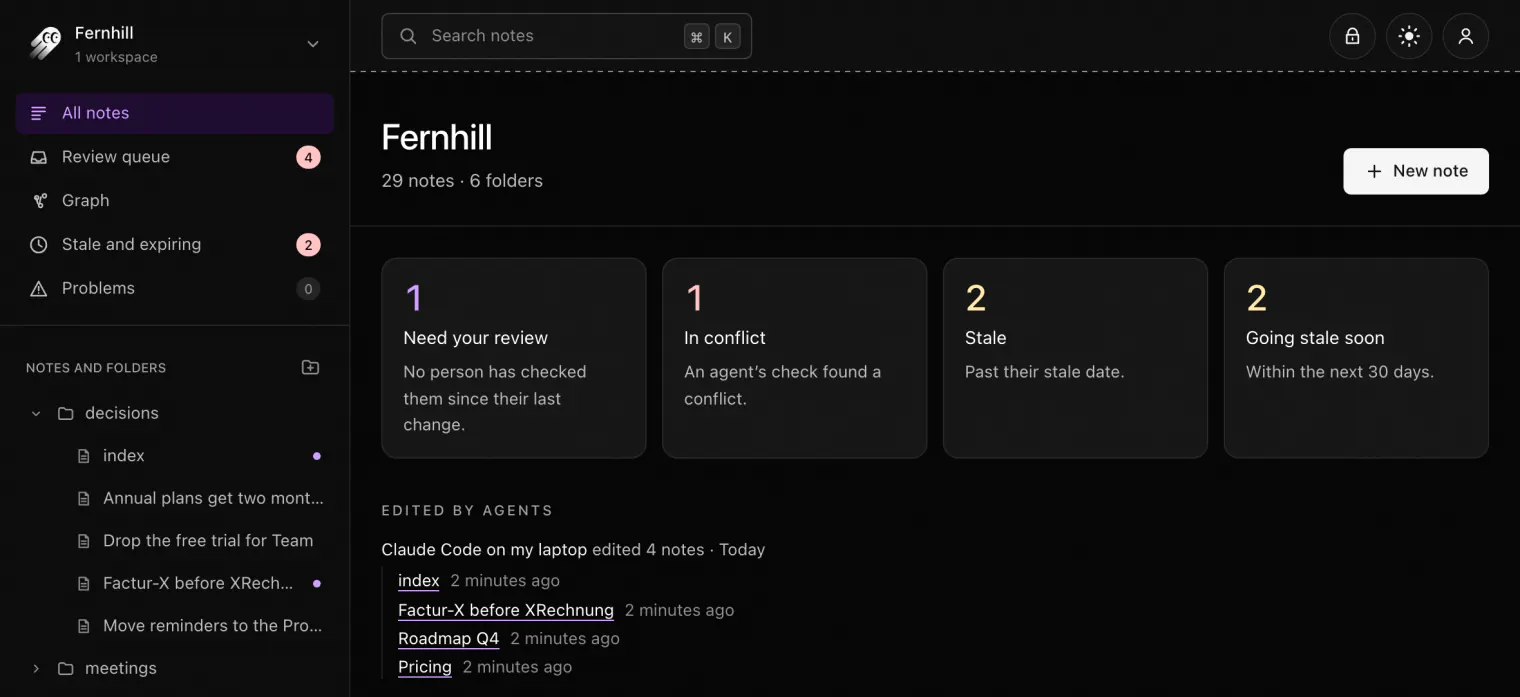
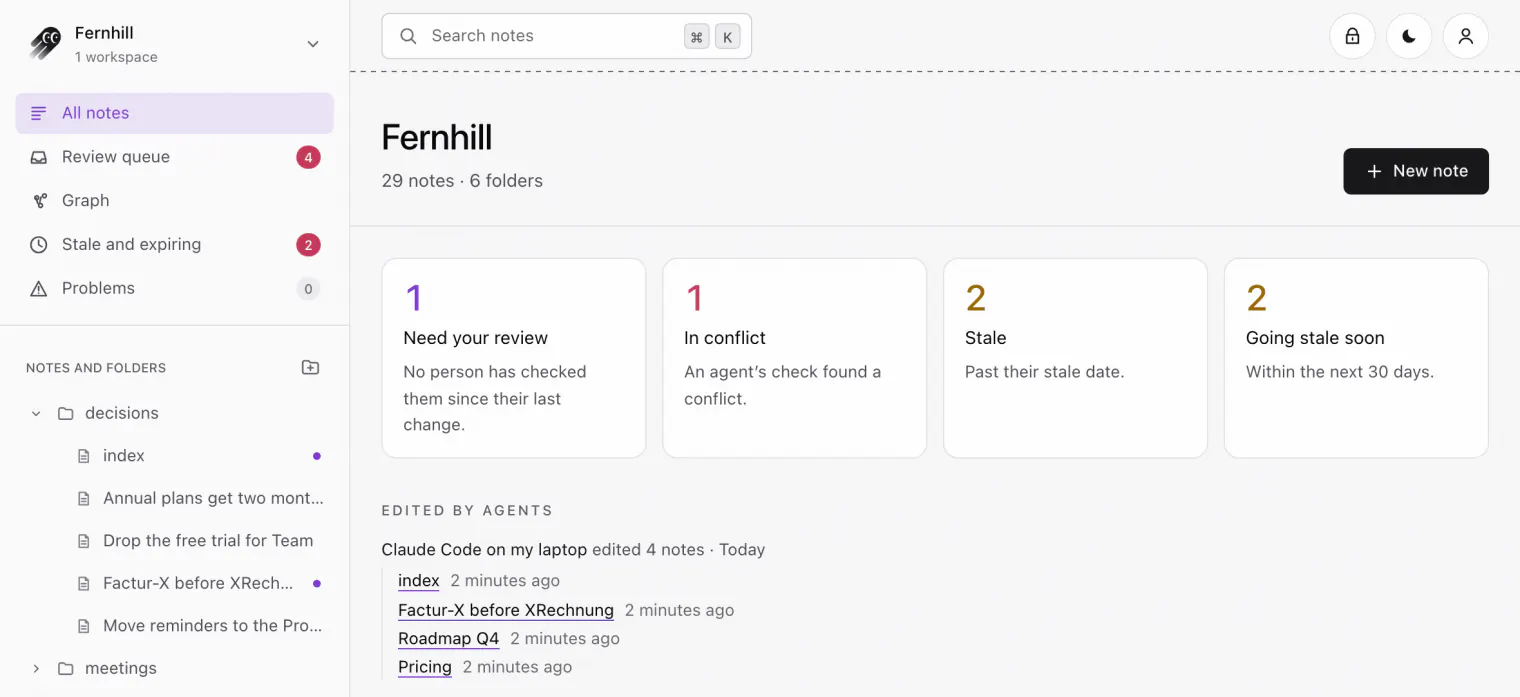
- A dot in the sidebar marks each note it edited until you open it, and the workspace page lists them under Edited by agents.
- Under a note's title, a line says Cursor edited it, with See changes for the diff and Undo to bring back the version before.
- Deletes, moves and folder changes are listed on the workspace page for two weeks, or your history period if that's shorter, under Deleted and reorganized by agents, with Undo and Undo this agent's last 24 hours. A deleted note comes back while your history period keeps it.
- The history keeps every version for as long as you set, from a day to a year. In folders with review on, changes wait in the review queue instead.
 (opens full size in a new tab)
 (opens full size in a new tab)
Our guide to reviewing agent edits has a routine for checking what an agent changed before you rely on it.
Troubleshooting
Cursor doesn't see Knowtarium
Restart Cursor after adding Knowtarium. Then check that knowtarium is listed and turned on where Cursor lists its MCP servers (Customize, in recent versions). If didn't list Cursor, add it by name: , from your home folder.
The CLI skipped Cursor's settings
It never overwrites a file it can't edit safely. If ~/.cursor/mcp.json isn't valid JSON or has comments, the CLI says so and leaves it alone. It also prints an "add it by hand" line with a server entry: ignore it, since an entry you write yourself runs npx in the project folder. Fix the file (or remove the comments, or move it aside), then run again.
Check the connection
shows the connected workspaces, their access and changes, the token and the local cache, and says where the keys are kept.
knowtarium says to update
If you used the command, run from your home folder. It updates the knowtarium entry in ~/.cursor/mcp.json (and your other agents') to the new version. If you used the link, click Add to Cursor again in the app. Then restart Cursor.
Changes wait for approval when you expected them saved
Cursor tells you whether each change was saved or proposed, and why: the folder asks for review, the workspace's settings couldn't be verified, today's limit of direct changes was reached, or this connection can only propose. For the last one, run again from your home folder, then restart Cursor.
Don't add it by hand
Use the connect command or the Add to Cursor link in the app, not a server entry you write yourself or one an MCP registry or marketplace installs (Knowtarium isn't in the MCP Registry yet, or in Cursor's MCP marketplace). Those run npx inside the project Cursor has open, where a project's own files could stand in for Knowtarium's.
Questions
Does Cursor see my notes?
Cursor sees what its agent reads, like the code you open in it, and so does the model it uses. Notes are decrypted only on your computer, and Knowtarium's servers hold them only as ciphertext. Connect Cursor to only the folders it needs, or read-only, to limit what it can read.
Does Knowtarium work in every Cursor project?
Yes. npx knowtarium connect adds Knowtarium to Cursor's user settings in ~/.cursor/mcp.json, not to one project, so it's there whichever folder you open. The server always runs from your home folder, never from the project you have open.
Can Cursor delete my notes?
Only if you gave it the permission to delete notes, which is off by default, and it's told to delete only when you asked for it in your conversation. In folders set to Ask me first, a delete waits for your approval. Each delete is listed on the workspace page with Undo, and the note comes back while your history period keeps it.
Should I use the Add to Cursor link or npx knowtarium connect?
Either works and runs the same server from your home folder. The link adds it to Cursor from the web app; the command also connects this computer and sets up any other agents it finds, such as Claude Code or Codex. Use one of the two to keep things simple.
Is Knowtarium in Cursor's MCP marketplace?
No, and it isn't in the MCP Registry yet either. Add it with npx knowtarium connect or the Add to Cursor link in the app, both of which start the server from your home folder.
Do I still need Cursor rules?
Yes, for how to work in a codebase. Knowtarium holds the knowledge itself, and its folder instructions, written in the app, apply to every agent you connect, so rules for the notes belong there.